
CW Day 3/Session 7 - Career Development: How you can turn a Psychosocial Hazard into a Thriving Strategy (UNESCO, United Nations Headquarters (DOS))

mai
06
mai 06, 2026
19:00 - 20:00 CEST


Career development is often assumed to be a source of motivation and growth. However, when poorly structured, unclear, or inequitable, it can become a significant psychosocial hazard—contributing to stress, disengagement, and reduced wellbeing.
In this session, we explore career development through the lens of psychological health and safety and organizational learning to reframe career development from a risk factor to a driver of engagement, wellbeing, and performance
Using real-world examples from the UN system, we will examine how career pathways can either undermine or enhance wellbeing.
Participants will learn how to:
•    Recognize when career development becomes a psychosocial risk  
•    Recognize early warning signs of career-related stress and disengagement
•    Apply practical strategies to regain agency and advocate for growth
•    Understand the shared responsibility between individuals, managers, and organizations
•    Shift from reactive career survival to intentional, thriving career strategies
This session is hosted by UNESCO Learning & Development (HRM) and United Nations Headquarters'  Staff Counsellors’ Office (DOS), offering both wellbeing and capability perspectives to support sustainable career growth.

Hosted By: 
UNESCO, United Nations Headquarters (DOS)

Dawn Straiton Mullin

Dawn Straiton Mullin is a doctorate-prepared Psychiatric Nurse Practitioner with nearly 20 years of experience in counselling, occupational mental health, and staff wellbeing within the United Nations. She currently serves as Chief of the Staff Counsellors Office in the UN Secretariat (DOS), bringing clinical expertise and organizational insight to advancing mental health by addressing psychosocial hazards at work. She has led psychosocial risk assessments across UN settings, from Headquarters to our hardest duty stations.  She has seen firsthand how career development can function as either a risk or a driver of thriving for both mental and physical health.   She is passionate about building psychologically safe, high-performing workplaces where people and organizations can thrive. 
During a 13-month assignment at UNESCO last year, Dawn and Adina explored practical approaches to this challenge, shaping the foundation of the topic presented today.    
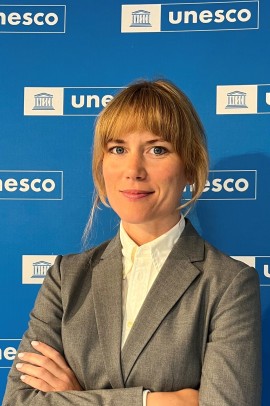
 

Adina Forsstrom

Adina Forsstrom is Head of Learning, Performance and Development at UNESCO in Paris, where she leads a team delivering global initiatives in staff development, performance management, employee engagement, and career development.
With more than 15 years of experience across UNESCO, UNHCR, UNICEF, and UNDP, she has designed and delivered leadership, career, and organizational development initiatives for senior leaders, managers, and emerging talent in humanitarian and development settings.
She has also served as Director of Human Resources for a non-profit organization and as an HR Business Partner in the private sector in her native Sweden, and has lived and worked across Europe, the United States, and Asia.
 

Margaret Jones

Margaret Jones has more than 30 years’ experience in the field of human resources, including recruitment and selection, learning and development, and career management. She joined UNESCO in 2014 as Learning Officer and has led initiatives such as career conversations and the introduction of one‑to‑one career support. She has also worked with the United Nations Headquarters in New York, heading the Language & Communications Training Unit to lead multilingualism projects and language teaching. Before joining UNESCO, Margaret worked across the private, public and third sectors.  Margaret has a long‑standing professional interest in how individuals build careers in complex organisations, with a particular focus on personal agency, informed decision‑making, and supporting staff to navigate their development with clarity and confidence.