CW Day 5/Session 4 - The Skills Shift: What skills-based hiring and AI agents might mean for a UN career (UNICC)

mai
08
mai 08, 2026
13:30 - 14:30 CEST


The UN system is evolving, and so is how it defines talent. As organizations across the Common System pilot skills-based approaches, roster reforms, and AI-assisted screening, the traditional path from Intern to D-1 is becoming less linear and more portfolio-driven. Meanwhile, AI agents are reshaping which functions remain uniquely human and which become augmented or automated. This session explores what these shifts mean for UN staff and candidates navigating interagency mobility, internal reassignments, and long-term career positioning. We'll examine emerging practices, unpack which skills are gaining strategic value in multilateral settings, and guide you through a practical self-assessment to future-proof your career within—and beyond—the blue flag. This isn't about predicting the future; it's about being ready to negotiate with it.
 

Hosted By: 
UNICC

Matt Valente

Matt has over 22 years of experience spanning the UK Government, the military, the private sector, and the United Nations system. Across these roles, he has worked at the intersection of leadership, transformation, and capability, with a consistent focus on helping organizations adapt to changing operational and workforce demands. He is a digital talent and AI-enabled transformation leader working at the intersection of HR, technology, and organizational change. At the United Nations International Computing Centre (UNICC), he leads digital talent acquisition and talent management initiatives, while also contributing to broader efforts to modernize workforce systems and rethink how organizations prepare for an AI-shaped future. He has been closely involved in designing and building UNIQTalent, an AI-enabled talent and HR platform created to improve recruitment, workforce insight, and decision-making across the employee lifecycle.
Alongside his operational leadership, Matt is part of UNICC’s emerging AI Nervous System work and has a strong research and practical interest in human-centred AI transformation. His work focuses on how AI can augment, rather than replace, human judgement; how organizations can redesign roles and processes responsibly; and how HR can help lead the transition to more adaptive, skills-aware, and AI-enabled ways of working across the UN system.
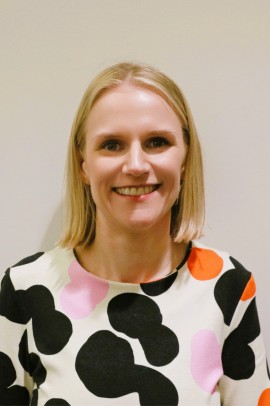
 

Olga Lehtinen

Olga Lehtinen is an HR development lead with over 12 years of experience across the private sector and the United Nations system. She currently leads the HR Development Team at the United Nations International Computing Centre (UNICC), where she drives initiatives in learning, talent management, and organizational culture, and leads skills gap analysis work at UNICC, building on similar experience from UNICEF.
Her roles have given her a front‑row view of how roles, career paths, and capability requirements are evolving in multilateral organizations. In her day‑to‑day work, Olga actively explores how AI, skills‑based approaches, and portfolio careers are reshaping talent decisions—using AI as a practical tool to support skills analysis, workforce upskilling, and more informed career navigation in an increasingly non‑linear UN system.